November 18, 2026
How to pick your first generative AI project for maximum impact
By @promptedwork
Starting with generative AI can feel overwhelming. There are models that write text, generate images, produce code, and even compose music. The key is not to try everything at once. Instead, pick one focused project that teaches you the core workflow: prompt design, model selection, output evaluation, and iterative refinement. A well-chosen first project builds confidence and gives you a template you can reuse for bigger ideas later.
Before you decide, think about what a useful first project looks like. It should be small enough to finish in a few days, solve a real problem you understand, and produce something you can actually test and improve. This is especially important if you are learning through a structured program. For example, a generative AI course that runs over two days needs a project you can scope tightly, so you spend time learning rather than debugging infrastructure.
Below is a practical checklist to help you evaluate any potential project. Each point comes with a short reason why it matters.
1. Does the project solve a problem you already understand?
You do not need to be a domain expert, but you should know the output format and the quality standards. If you are drafting marketing copy, you know what a good headline sounds like. If you are generating internal meeting summaries, you know what details matter and what to leave out. Understanding the output lets you judge the model's work quickly, which is how you learn to improve prompts and settings. A project in a field you know nothing about will waste time on learning the domain instead of learning generative AI.
2. Can the task be handled by a single model call or a simple pipeline?
A useful first project avoids chaining multiple models, building custom UIs, or integrating with complex databases. The simplest shape is: you send a prompt, the model returns a result, you check it. If it works, you are done. If not, you tweak the prompt or try a different model temperature. This loop is the fundamental skill. A project that requires orchestration, like a multi-step agent that calls APIs and stores state, introduces too many failure points at once. Save that for your second or third project.

3. Do you have a clear test set of inputs and expected outputs?
Before you write a single prompt, collect five to ten examples of what a good output looks like. If you are generating product descriptions, find real descriptions that match the tone you want. If you are summarising articles, write one or two summaries yourself. These examples become your benchmark. When you try a new prompt or model, you compare the output against your examples. Without a test set, you cannot tell if the model is improving or just producing plausible-sounding nonsense.
4. Is the output safe to share within your team or organisation?
Generative models can produce text that sounds confident but is wrong, or worse, offensive or private. Choose a project where errors are low-risk. Drafting internal announcements, generating code snippets for a sandbox environment, or creating draft social media posts for review are safer than generating medical advice, financial recommendations, or anything that might include customer personal data. Your first project should let you experiment freely without worrying about compliance or reputation damage.
Once you have a shortlist of candidate projects, the next step is to match one with the format of your learning. If you are taking a generative AI course, look for a program that guides you through building and deploying a simple application. The structured environment helps you avoid common pitfalls like prompt injection, cost overruns, or picking a model that is too large for your hardware. A program like workforcelearning.unitedceres.edu.sg is designed for professionals who want to go from idea to working app in two days. The project you choose should align with that pace: something you can prototype by lunch on the second day and present by the end.
5. Can you evaluate the output objectively?
Subjective tasks like "write a funny tagline" are hard to judge consistently. Objective tasks like "extract the three main action items from this email" give you a clear pass or fail. The more objective your evaluation, the faster you improve. If the output is a list of bullet points, you can count how many are correct. If it is a translation, you can ask a colleague who knows the language. This feedback loop is what turns a toy project into a real skill.
6. Does the project require access to data you already have?
Many first projects stall because the data is locked in a database, scattered across emails, or requires cleaning and labelling. Pick something where the input is a short text you can type or paste. For example, rewriting a paragraph in a different tone, summarising a news article you just read, or generating questions from a set of notes. If you have to spend a day preparing data, the project is too big. The goal is to practice with the model, not to build a data pipeline.
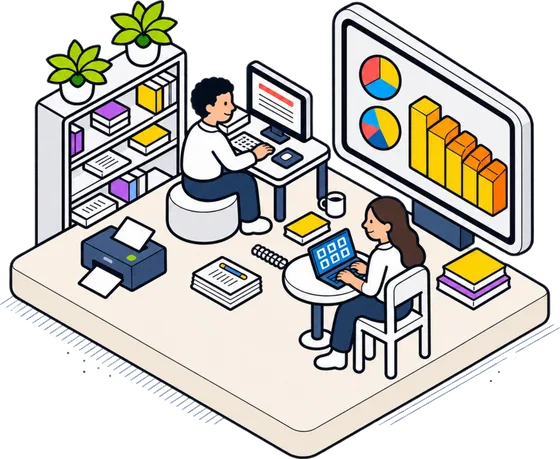
United Ceres College offers a classroom-based generative AI course that follows this philosophy. The course is built around a single practical project that attendees can finish in two days. The instructors help you scope the project so it fits the time frame and gives you a working outcome. That structure is exactly what a first project needs: boundaries, feedback, and a clear end state. If you are considering the course, bring a small problem from your own work and see if it fits the checklist above. You will get more out of the experience if you already have a candidate in mind.
Another common mistake is choosing a project that requires the model to produce long, coherent content from scratch. A 500-word article or a full page of code is hard to get right on the first try. A better first project generates short outputs: a few sentences, a bullet list, a single paragraph, or a few lines of code. Short outputs are easier to evaluate, and you can iterate many times in a short session. Once you understand how to control length and tone, you can scale up.
Think also about how you will use the output. If the project produces something you can paste directly into a document, a spreadsheet, or a message, you have a clear success signal. If the output needs heavy editing before it is useful, you may be better off writing from scratch. The sweet spot is a task where the model saves you 50% to 80% of the effort, and the rest is light editing. That ratio keeps you motivated and shows real productivity gain.
United Ceres College also emphasises the importance of evaluating model outputs critically. In their generative AI course, they teach a simple rubric: accuracy, relevance, tone, and completeness. Applying that rubric to your own project helps you decide when to stop tweaking and call the output good enough. That judgment is one of the most valuable skills you develop. It prevents you from spending hours chasing perfection when the output is already useful.
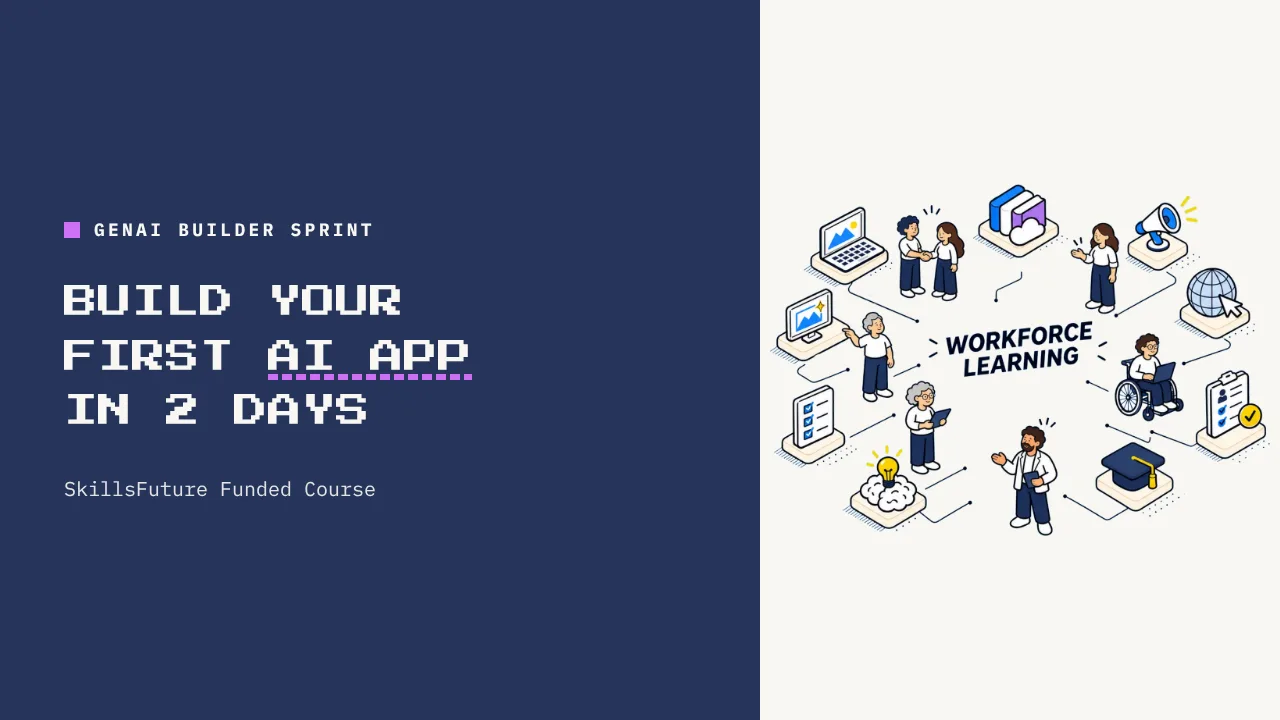
Finally, consider the cost. Generative AI models charge per token, and a large project can run up surprising bills. A first project should cost no more than a few dollars in API calls, even with experimentation. If you are using a hosted model through a service like workforcelearning.unitedceres.edu.sg, the cost is often included in the course fee, which removes that worry. For self-directed learning, pick a small model or use a free tier until you are confident in your approach.
To wrap up, the ideal first generative AI project is small, familiar, objective, low-risk, and cheap. It lets you practice the core loop of prompting, evaluating, and refining. It fits within the time you have, whether that is two days in a classroom or a weekend on your own. And it solves a problem you care about, so you stay motivated through the inevitable moments of confusion. Start with the checklist above, pick one project that meets most of the points, and commit to finishing it. That one success will teach you more than reading ten articles about generative AI strategy.
United Ceres College on social media
 Twitter
 LinkedIn
 Facebook
 Instagram
 YouTube
❧